Children and AI
How Should Schools Assess Learning in the AI Era?
When AI can write a passing essay in seconds, the essay stops proving learning. What memory research says about effort, and how to assess the thinking instead.
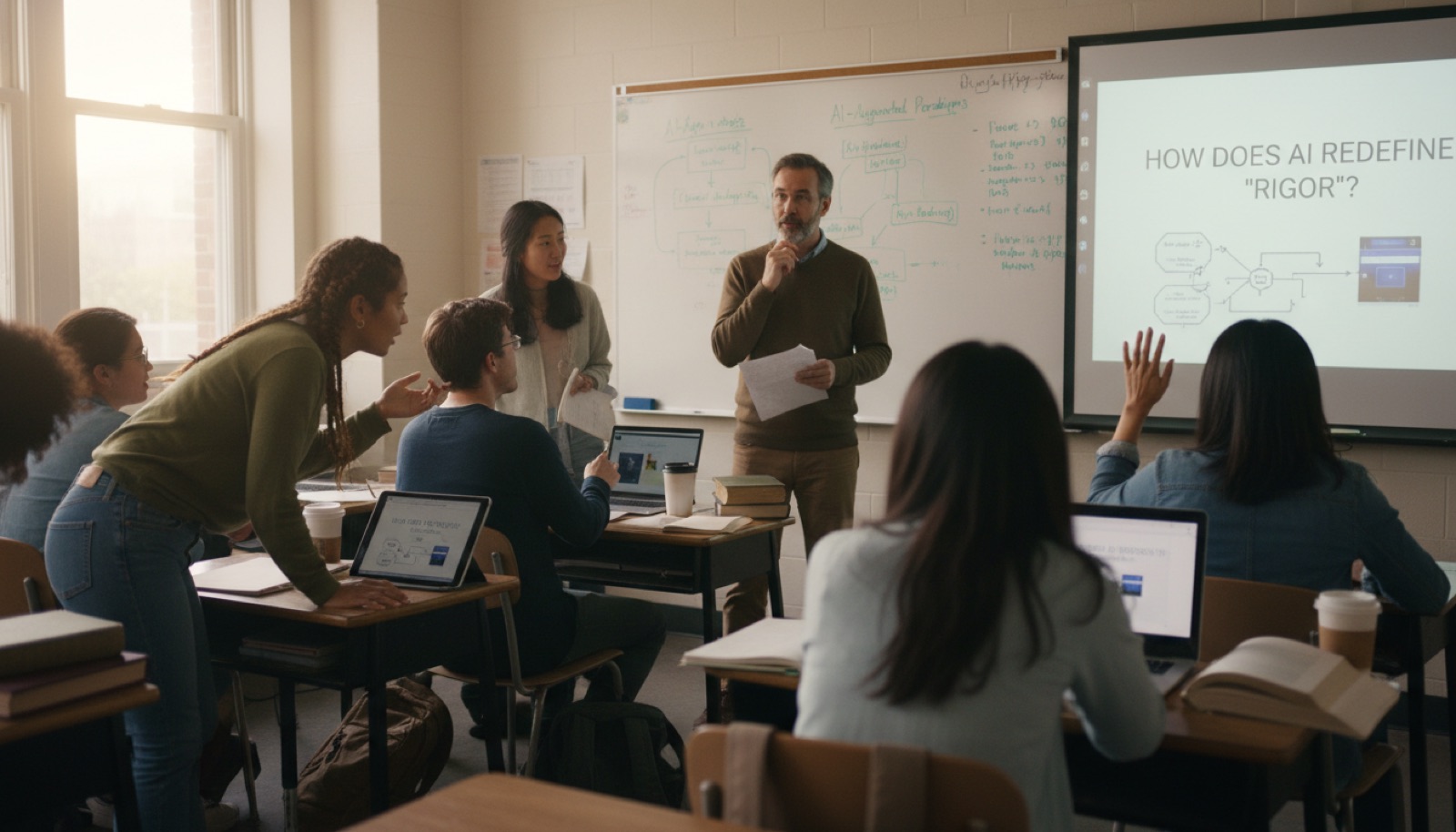
When an AI can produce a passing essay in seconds, a finished essay no longer proves that a student learned anything. Schools need to assess the thinking behind the work, because memory research shows that the effort of producing an answer is a large part of how learning sticks.
This article is for teachers and school leaders rethinking homework and assessment. It sets out how fast student use is growing, what learning science says about effort, and practical ways to assess the process.
How many students use AI for schoolwork?
The share is rising fast. The Pew Research Center found that 26% of US teens aged 13 to 17 had used ChatGPT for schoolwork, up from 13% a year earlier. Most, 73%, had not yet, so habits are still forming, which is a reason to set clear expectations now.
Why does the effort of learning matter?
Three well-established findings explain why handing the work to AI can undercut learning.
- The generation effect. In 1978 Slamecka and Graf showed that people remember information they generate themselves better than information they simply read. Writing an argument, not just reading one, is part of how it is learned.
- Desirable difficulties. Elizabeth and Robert Bjork describe how some kinds of difficulty during study, such as spacing sessions out, mixing topics and testing yourself rather than rereading, slow learning down in the moment but make it last.
- The illusion of explanatory depth. Rozenblit and Keil found that people believe they understand how things work in far more detail than they do. A fluent AI answer can strengthen that illusion: the student has read a good explanation and feels they own it.
What does the evidence on AI and learning show?
Recent studies fit this picture. In a field experiment with nearly 1,000 high school maths students, Bastani and colleagues found that students with an unrestricted chatbot performed better during practice but worse on a later exam without it. A tutor version that gave hints instead of answers largely avoided that harm.
A smaller study by Nataliya Kosmyna and colleagues, Your Brain on ChatGPT, measured the brain activity of 54 people writing essays. Those who wrote with an AI assistant showed the weakest brain connectivity of the three groups, reported the lowest sense of ownership of their essays, and struggled to quote their own work. It is a preprint with a small sample, so it is a signal to watch, not a settled result.
Can AI support learning instead?
Yes, when it is assigned with a purpose. Ethan and Lilach Mollick’s Assigning AI describes seven ways to use AI with students, including as a tutor, coach, teammate or a “student” that learners teach, each with its own risks. Analysis: what these approaches share is that the student still does the thinking, and the AI asks, prompts or pushes back rather than producing the final work.
How should assessment change?
Grade the process, not only the product:
- Explain it aloud. Short oral checks or class discussions show whether a student understands what they submitted.
- Do key work in class. Write first drafts, solve core problems or plan arguments where the teacher can see the thinking.
- Ask for the trail. Notes, drafts, sources checked and, where AI was allowed, the prompts used and what the student changed.
- Make AI the object of critique. Give students an AI answer and ask them to find its errors, check its claims against sources and improve it.
- Space and mix. Use regular low-stakes quizzes across topics: the desirable difficulties that build lasting memory.
- Keep some work AI-free. Students still need to show they can write, calculate and reason without help, just as calculators did not end mental arithmetic. A few supervised, AI-free tasks each term give an honest baseline, and make it fair to allow AI elsewhere.
What should schools do next?
- Set a clear AI policy per task: not allowed, allowed with disclosure, or required as part of the exercise.
- Redesign the highest-stakes assessments first, so that grades reflect what students can do themselves.
- Choose tools that teach. Prefer AI that gives hints and questions over AI that gives answers.
- Teach students why. Explain the generation effect: doing the work is how they learn it, not a hoop to jump through.
For the privacy side of AI in schools, see AI in the Classroom: Better Learning or Less Privacy?.
Frequently asked questions
How many students use AI for schoolwork?
Pew Research Center found that 26% of US teens aged 13 to 17 had used ChatGPT for schoolwork in a survey from September and October 2024, double the 13% in 2023.
Why does doing the work yourself help you learn?
Memory research shows that information people generate themselves is remembered better than information they only read, an effect first described by Slamecka and Graf in 1978. Some effort during learning, which researchers call desirable difficulty, makes knowledge last.
Does AI help or hurt learning?
Both are possible. In a study of nearly 1,000 maths students, an unrestricted chatbot improved practice scores but lowered exam scores; a tutor that gave hints rather than answers avoided the drop.
How can teachers assess learning when students use AI?
Assess the process as well as the product: oral explanations, work done in class, drafts and notes that show how the student reached an answer, and tasks that ask students to critique and check AI output.
References
- Pew Research Center (2025), About a quarter of U.S. teens have used ChatGPT for schoolwork, double the share in 2023 — 26% of US teens had used ChatGPT for schoolwork, up from 13% in 2023; 73% had not.
- Slamecka and Graf (1978), The generation effect: Delineation of a phenomenon, Journal of Experimental Psychology: Human Learning and Memory 4(6) — The original description of the generation effect.
- Bjork and Bjork (2011), Making things hard on yourself, but in a good way: Creating desirable difficulties to enhance learning — Desirable difficulties: varying conditions, interleaving topics, spacing study, and using tests as learning events.
- Rozenblit and Keil (2002), The misunderstood limits of folk science: an illusion of explanatory depth, Cognitive Science 26(5) — People believe they understand how things work in far more detail than they do.
- Bastani et al. (2025), Generative AI without guardrails can harm learning: Evidence from high school mathematics, PNAS — Unrestricted chatbot use helped practice but harmed later exam performance; safeguards largely prevented the harm.
- Kosmyna et al. (2025), Your Brain on ChatGPT: Accumulation of Cognitive Debt when Using an AI Assistant for Essay Writing Task (preprint) — 54 participants; EEG showed the weakest brain connectivity in the AI-assisted group, which also reported the lowest ownership of their essays.
- Mollick and Mollick (2023), Assigning AI: Seven Approaches for Students, with Prompts — Ways to assign AI as tutor, coach, teammate or student, with the risks of each.